
Understanding the real impact of gaming and social media on regulation
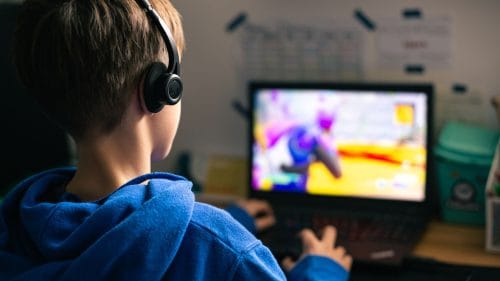
We have all been there when we ask a child to stop playing a game or come off a device and they suddenly become agitated, desperate, angry and frustrated, and they struggle to be able to follow your instructions. It’s easy to assume this is just “bad behaviour,” but what’s actually happening is far deeper and is often out of the child’s own control.
Technology, especially gaming and social media, activates the brain’s reward pathways, giving us a ‘hit’ or ‘reward’ which are associated with pleasure and reward. Unfortunately, the apps and games our children regularly use are designed to keep their attention and they stimulate instant gratification which means the brain is rewarded for constant input and fast-paced feedback. This can be really addictive and it also:
1. Stimulates the amygdala responsible for threat detection and survival (I call this the survival part of the brain)
Most popular games are based on winning, escaping, or surviving and when the brain is exposed to this kind of stimulation for long periods, it begins to perceive the environment as unsafe, even after the game is turned off. It doesn’t know the difference between reality and fantasy and therefore believes the ‘threat’ is real. The child’s nervous system then remains in a heightened state of arousal, working from the survival brain rather than the rational, thinking brain (the prefrontal cortex).
This is why children often struggle to regulate their emotions and behaviour immediately after screen time. Their brain hasn’t had the chance to go back into a state of calm. They aren’t misbehaving, they’re trying to navigate a stress response with a nervous system that hasn’t yet returned to its baseline.
It is easy to see the external behaviour and tell the child off, or become exhausted and frustrated ourselves but using the science to guide you, there is another way.
Try this instead:
-Introduce a 30-minute tech transition, a calm activity after screen time that helps the child to regulate (calm down) and flick back into the rational thinking part of the brain. Try:
-Calm colouring or drawing
-Playing outdoors on a swing (self-regulation) or a bike
-Building something with lego or construction
-Reading or listening to an audio book
Even just gentle music and dimmed lighting can help!
Let me know your own experiences and if anything in particular works for you!
Shahana xx